Keyword Research
Part of Search campaign structure and match types
Structuring ad groups around distinct landing-page promises
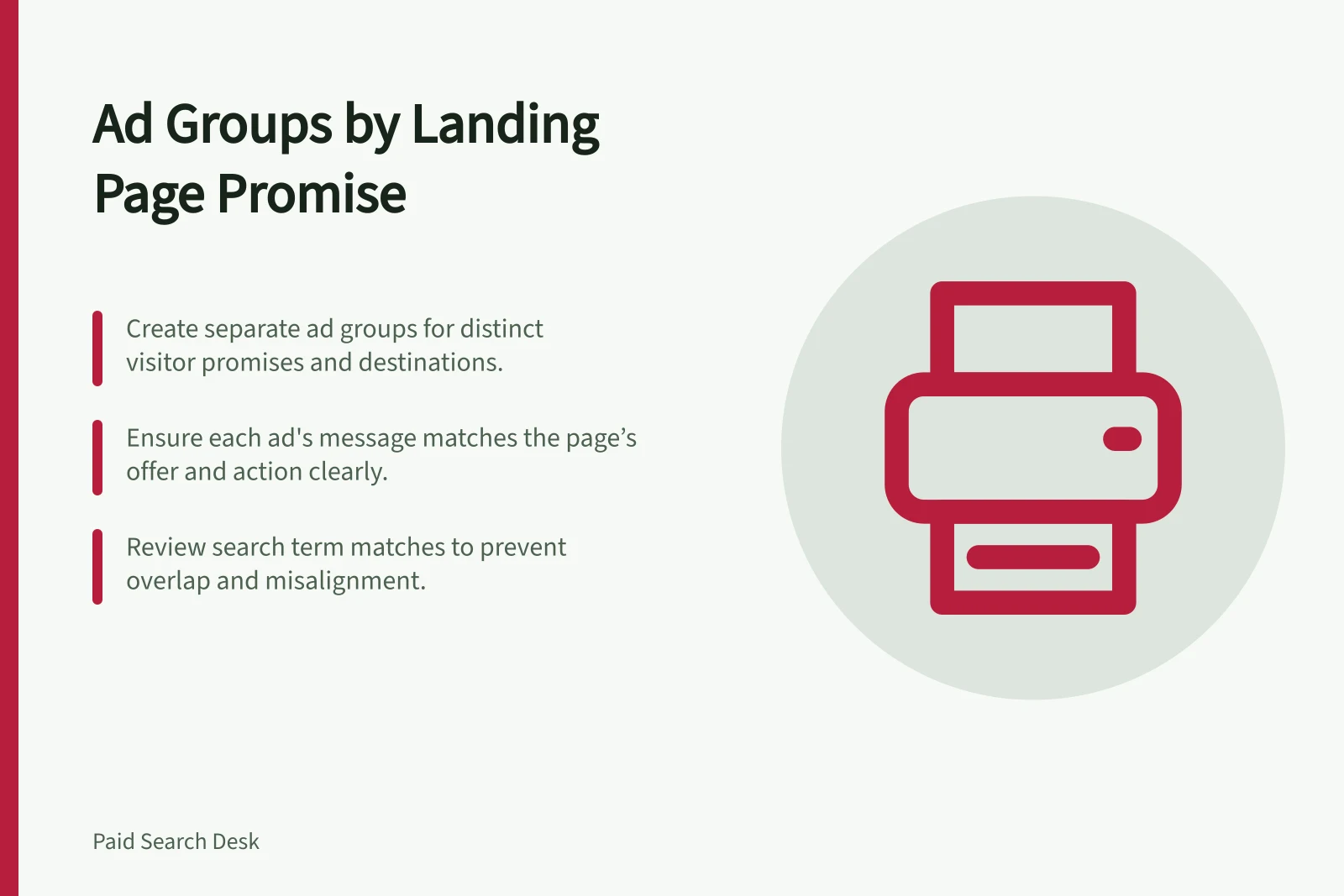
Decide when searches need separate Google Ads ad groups by testing the ad promise, destination page and visitor’s next step.
Consider a separate Google Ads ad group when searches need a materially different ad promise and destination. Keep wording variations together when one accurate message and page can serve them all. The test is what a visitor should expect after clicking, not how many phrases sit in a keyword list.
Define the promise before the group
For each proposed group, complete this sentence: ‘This ad offers ___, and its page lets the visitor ___.’ If one specific sentence cannot cover the proposed searches, check whether they represent different customer tasks.
Imagine a business that both leases and repairs commercial printers. A leasing ad could lead to lease options and an enquiry; a repair ad could lead to equipment eligibility and a service request. A generic ‘printer solutions’ ad would give neither visitor a clear promise.
These are hypothetical offers, not observed search terms or results.
| Search need | Ad promise | Destination and action |
|---|---|---|
| Arrange a printer lease | Leasing options and conditions | Leasing page and enquiry route |
| Book a printer repair | Repair eligibility and process | Repair page and service request |
| Rephrase the same lease request | The same leasing promise | The same page, if it answers the variation |
The last row does not warrant another group merely because the words changed. A split is useful when it lets you give visitors a different, accurate answer.
Check the destination against the ad
Google Ads Help includes topics on organising an account with ad groups and on optimising ads and landing pages. For each proposed group, check the current page for the advertised offer, important conditions and the action named in the ad.
If the page does not support the promise, choose a more suitable destination or revise the proposed message. A group name cannot fix a missing offer.
A business with only one broad page may still have two distinct offers. Decide whether the existing page can clearly serve each one before creating the groups. This is a destination decision; it does not require a dedicated page for every ad group.
Check overlap after launch
Related searches may fit keywords in more than one group. Google Ads Help has a topic on ad group and asset group prioritisation within an account.
Prioritisation may affect which group serves a search, so a tidy plan cannot guarantee that every search reaches the expected page.
Review visible search terms with their matched keywords. For a surprising match, inspect the relevant group themes, ads, destinations and eligibility. Add a group when it supplies a genuinely different promise; a second name for the same message and page rarely clarifies the account.
Keep a brief record of each group’s customer task, promise and destination. Revisit it when the offer or page changes, so the ad continues to promise something the page can fulfil.