Keyword Research
Part of Paid search keyword research
Separating research queries from purchase-ready searches
Read the task behind a search, choose a useful response and avoid mistaking search volume or a single word for purchase intent.
A search phrase can hint at whether someone wants to learn, compare options or contact a supplier. It cannot prove their readiness to buy. Read the whole phrase, then decide what answer and next step the business can offer.
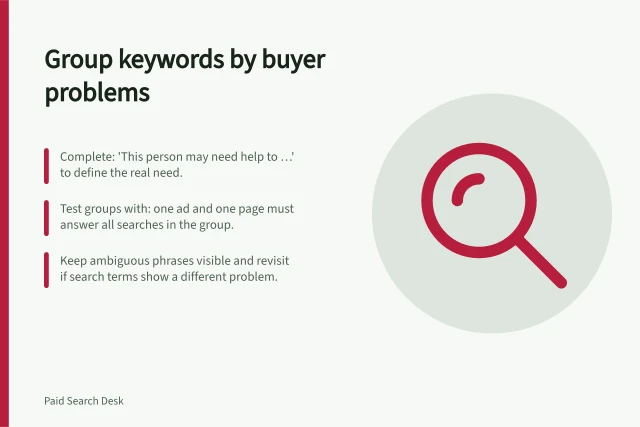
Identify the immediate task
“How to” often signals a request for guidance. A search mentioning a quote, booking, product model or location may signal a possible transaction. Neither pattern is decisive: someone comparing suppliers may contact one today; someone searching for a product to buy may still be checking its suitability.
Ask three questions of each candidate phrase:
- What does the searcher appear to need now?
- Can this business answer that need honestly on a suitable page?
- What next action would make sense after that answer?
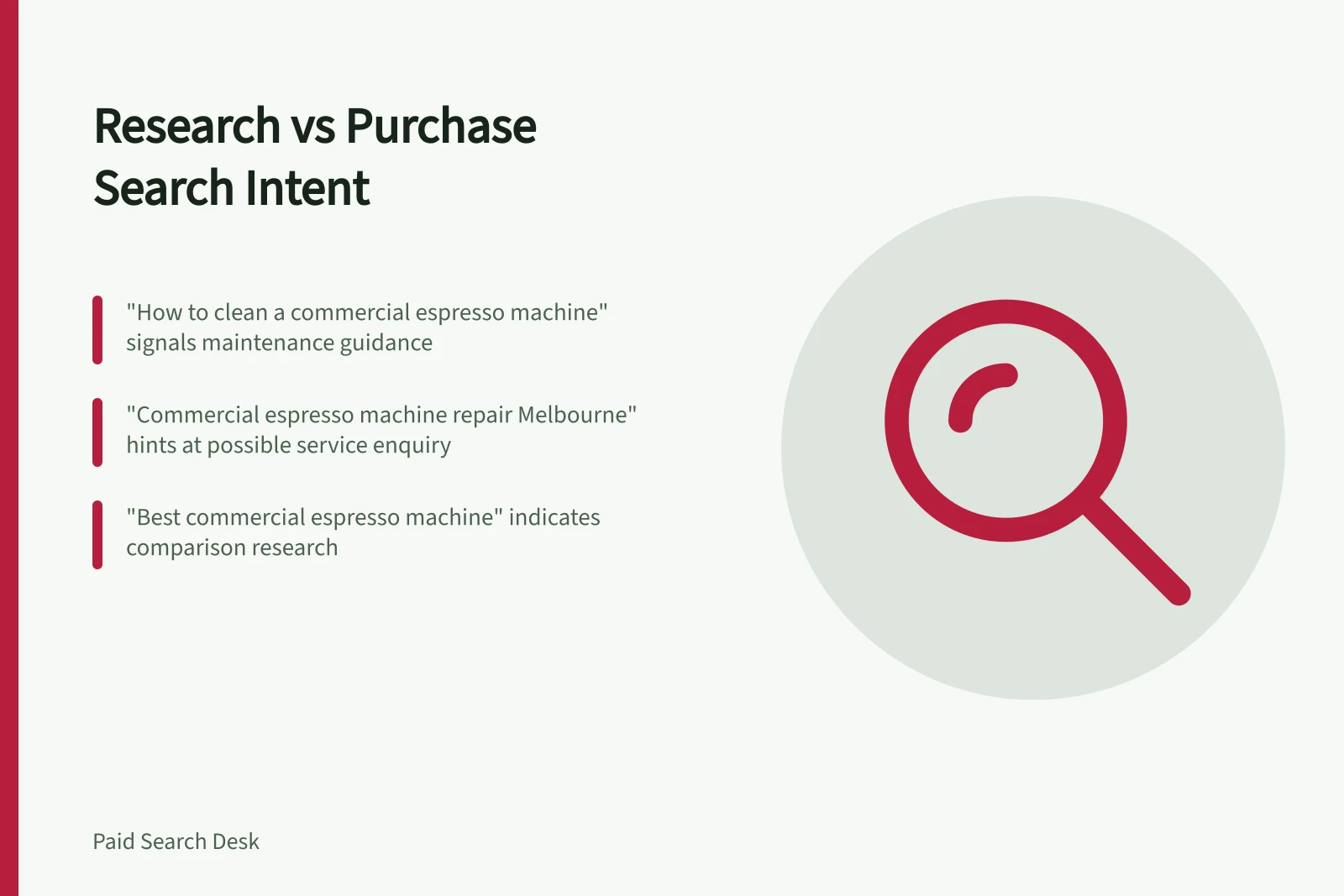
For a hypothetical Australian business that repairs commercial espresso machines, “how to clean a commercial espresso machine” suggests a maintenance question. “Commercial espresso machine repair Melbourne” suggests a possible service enquiry, subject to the actual service area and machines accepted. “Best commercial espresso machine” may indicate comparison research. These interpretations do not establish search volume or conversion likelihood.
Choose a response
| Likely task | Response to consider | Reason to hold or reject |
|---|---|---|
| Learn | A clear explanation, if it serves a business goal. | No suitable answer or reason to pay for the visit. |
| Compare | Relevant differences and a way to narrow the choice. | The business cannot support the comparison honestly. |
| Request a product or service | Availability, eligibility and an enquiry or purchase step. | The request cannot be fulfilled. |
| Seek help after purchase | A support route. | The acquisition page would be the wrong destination. |
A research search may be worth testing when the business can answer it and offer a sensible next step. A seemingly transactional search may still be unsuitable because the request is outside the service area or offer. This classification describes the likely task, not the keyword's commercial value.
Keep Planner estimates separate from intent
Keyword Planner estimates and other advertising metrics can help compare phrases, but they do not establish an individual searcher's readiness to buy.
Keep the settings and estimate date with any comparison of phrases. If a phrase could serve more than one task, record the plausible interpretations and decide whether one page can answer them clearly. Do not assign intent from volume, bid range or one modifier alone.
After launch, compare reported search terms with the intended response and assess enquiries or orders separately. Revisit a classification when visible searches and business outcomes point to a different need.